 ZeroThreat Wins Bronze Stevie® Award in Tech Startup of the Year Read more

All Blogs
Understanding Multi-Tenant SaaS Security: Key Risks, Benefits, and Tips
Quick Summary: Multi-tenant SaaS security focuses on protecting shared infrastructure without exposing shared risk. This blog explains how tenant isolation, access controls, API security, and proper configuration shape a secure SaaS environment. You’ll learn the key risks, core benefits, and best practices that help SaaS teams build a safer and reliable multi-tenant architecture.
Multi-tenant SaaS has become the backbone of the modern cloud ecosystem. From customer management to finance and analytics, a single SaaS platform now powers thousands of businesses at once.
Its shared model is the reason SaaS has become so scalable, cost-effective, and innovative. According to Gartner analysts, over 85% of businesses will adapt to the cloud-first principle by 2025, largely built on these multi-tenant foundations.
But with shared infrastructure comes shared risk. A single misconfiguration or weak access control in a multi-tenant environment can expose sensitive data across customers. For SaaS providers, one security threat can erode trust, trigger compliance issues, and cause reputational damage.
That’s why multi-tenant SaaS security is now one of the top priorities for growing SaaS providers. As platforms scale and onboard more tenants, maintaining strong data isolation, secure access, and continuous visibility becomes critical. In this blog, we’ll break down the key risks, benefits, and best practices to secure a multi-tenant SaaS environment from cyberattacks.
Get instant visibility into hidden risks in your SaaS. Create your account and begin testing. Start Free Test
On This Page
- What is Multi-Tenant SaaS Security?
- Common Multi-Tenant SaaS Security Risks
- Benefits of a Secure Multi-Tenant SaaS Model
- Challenges of Multi-Tenant SaaS Security
- Best Practices for Securing Multi-Tenant SaaS Applications
- Wrapping Up
What is Multi-Tenant SaaS Security?
Multi-tenant SaaS security is the practice of protecting a cloud application where multiple customers (tenants) share the same infrastructure, databases, and resources. It focuses on keeping each tenant’s data and activity isolated, even though they all use the same system.
In a multi-tenant SaaS architecture, one application instance serves many users or organizations. This model brings efficiency, scalability, and cost savings. But it also introduces new security challenges. Since resources are shared, a single misconfiguration or weak access control could expose sensitive data across tenants.
That’s where using a SaaS security testing tool becomes necessary. It ensures that every tenant’s data stays separate, encrypted, and protected from others in the same environment. This includes implementing strong access control, tenant isolation, and data-layer security. It also means securing APIs, managing permissions, and monitoring for unusual cross-tenant activity.
Common Multi-Tenant SaaS Security Risks
With multiple customers sharing the same infrastructure, one weak link can put everyone at risk. Understanding the common security risks can help you identify where your SaaS architecture is vulnerable. So, let’s have a look at that.
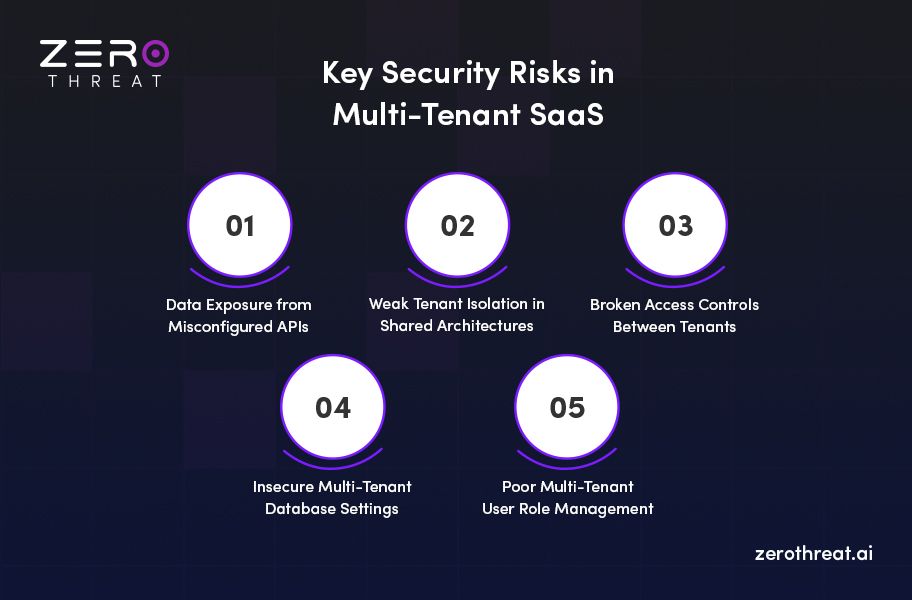
Data Exposure from Misconfigured APIs
APIs are the core of most SaaS platforms, and when they are misconfigured, they can expose sensitive tenant data. A single weak endpoint can allow unauthorized access to another tenant’s information. These security misconfigurations are one of the biggest risks in multi-tenant SaaS environments. Regular API security testing and strict access validation are key to preventing sensitive data exposure.
Weak Tenant Isolation in Shared Architectures
In a multi-tenant SaaS architecture, isolation failures are a serious threat. When one tenant’s data isn’t properly separated from another’s, attackers can move laterally across shared systems. Even small coding errors or mismanaged permissions can lead to cross-tenant exposure. You need to implement strong logical isolation and perform consistent testing to maintain security in shared environments.
Broken Access Controls Between Tenants
Broken access control remains one of the top vulnerabilities in multi-tenant systems. If permissions aren’t tightly managed, users might gain access to data or features outside their tenant. This can happen due to flawed role mapping, weak validation, or API misconfigurations. Implementing least privilege access and continuous validation helps reduce this risk.
Insecure Multi-Tenant Database Settings
Shared databases make multi-tenant SaaS database security more complex. Poor schema design, missing encryption, or shared credentials can lead to serious data breaches. Each tenant’s data should be logically isolated, encrypted, and accessible only through secure, authenticated channels. Proper database configuration ensures data separation without sacrificing performance.
Poor Multi-Tenant User Role Management
Managing roles and permissions across multiple tenants can quickly become complex. If you have inconsistent role definitions or weak privilege controls, it will allow attackers to exploit your SaaS application. A strong multi-tenant user management ensures each tenant has clearly defined roles, limited access, and proper security oversight.
Benefits of a Secure Multi-Tenant SaaS Model
A secure multi-tenant SaaS model protects data, builds trust, reliability, and long-term growth. Here’s why a secure foundation matters for every SaaS solutions provider.
Stronger Data Protection Across Tenants
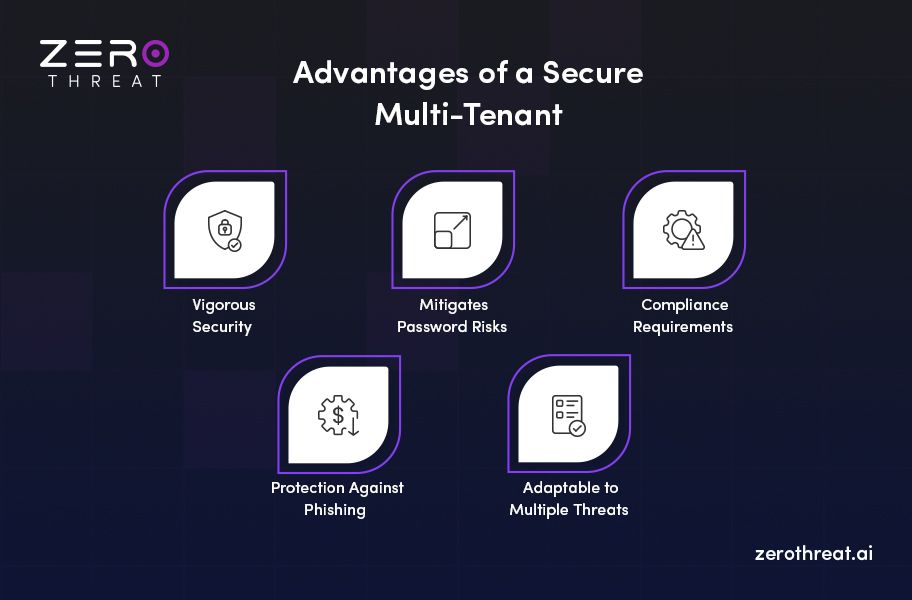
A secure multi-tenant SaaS architecture ensures that every tenant’s data stays fully isolated, encrypted, and protected. Even though resources are shared, strong access control and tenant isolation prevent cross-tenant exposure. It ensures that sensitive information can’t leak between users or organizations. This level of multi-tenant SaaS security is what separates a reliable platform from a risky one.
Scalability Without Compromising Security
Security should grow with scale, not get weaker because of it. In a secure multi-tenant SaaS model, security controls are built into the architecture, allowing providers to add new tenants without losing protection. Centralized monitoring and automated checks keep the environment stable. It’s what allows SaaS companies to expand while maintaining consistent security standards.
Faster Incident Detection and Response
A well-secured multi-tenant SaaS environment gives teams real-time visibility into threats. With centralized logging, automated alerts, and tenant-level monitoring, you can detect and contain incidents quickly. Since all tenants operate in a unified framework, responses are faster and more coordinated, minimizing downtime.
Reduced Operational & Infrastructure Costs
A secure multi-tenant setup lowers costs while keeping protection strong. Shared infrastructure means less duplication of security tools, audits, and monitoring systems. By centralizing these functions, teams save both time and resources. The result is a cost-efficient, secure multi-tenant SaaS architecture that is efficient and compliant.
Simplified Compliance with Audit Readiness
Meeting regulations like GDPR, SOC 2, or HIPAA becomes easier in a multi-tenant SaaS platform that’s designed with compliance in mind. Implementing centralized policies and unified security controls allows you to stay compliant with ease. Plus, you can demonstrate transparency and accountability, which builds confidence with clients and other regulatory bodies alike.
Test your SaaS solution with real-world attack simulations built for multi-tenant architectures. Run Automated Pentest
Challenges of Multi-Tenant SaaS Security
Securing a multi-tenant SaaS environment comes with its own set of challenges. From managing shared resources to preventing data leaks between tenants, even small oversights can create serious risks. Understanding these challenges will help you build a stronger, more secure SaaS architecture.
Managing User Access and Roles
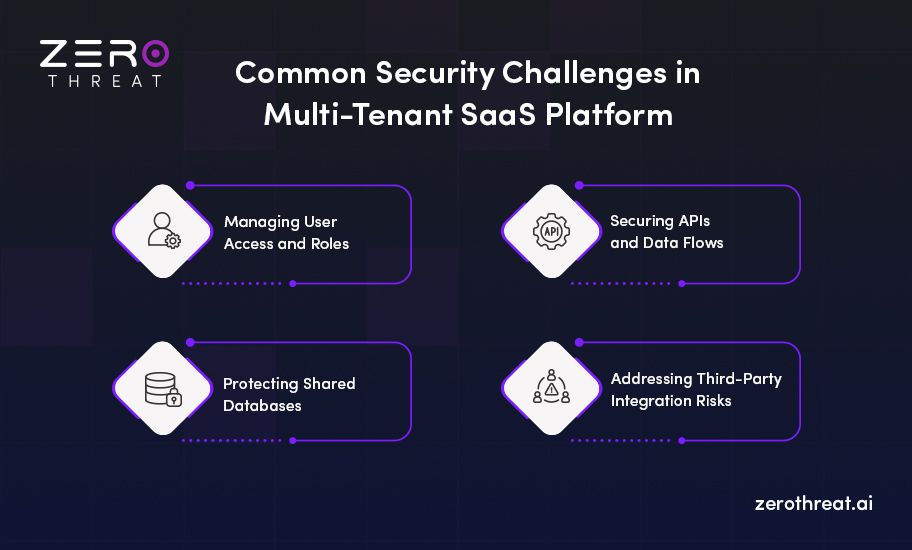
User access control becomes complex in a multi-tenant SaaS environment. Each tenant has different user types, permissions, and data access needs. Without clear separation and consistent policy enforcement, privilege misuse or cross-tenant access can occur. Effective multi-tenant user management ensures the right people have the right access, and nothing more.
Securing APIs and Data Flows
APIs connect everything in a multi-tenant SaaS platform, but they also increase the attack surface. A misconfigured endpoint or broken authentication can expose data between tenants. Ensuring secure data flows means validating every request, encrypting traffic, and limiting API access by tenant.
Protecting Shared Databases
Shared databases in multi-tenant SaaS applications pose high security risks. Weak isolation or poorly designed schemas can allow one tenant’s data to be accessed by another. Encrypting data, segmenting tables, and using tenant-specific keys can help you protect data confidentiality and maintain trust.
Addressing Third-Party Integration Risks
Most SaaS platforms rely on third-party services for analytics, billing, or storage. These integrations can become weak links if not properly monitored and secured. A compromised integration can expose multiple tenants at once. Therefore, continuous monitoring and strict vendor security assessments are crucial to protect SaaS environments from external risks.
Best Practices for Securing Multi-Tenant SaaS Applications
Strong security practices help ensure isolation, prevent breaches, and keep your platform compliant and reliable. Here are some proven ways to strengthen multi-tenant SaaS security.
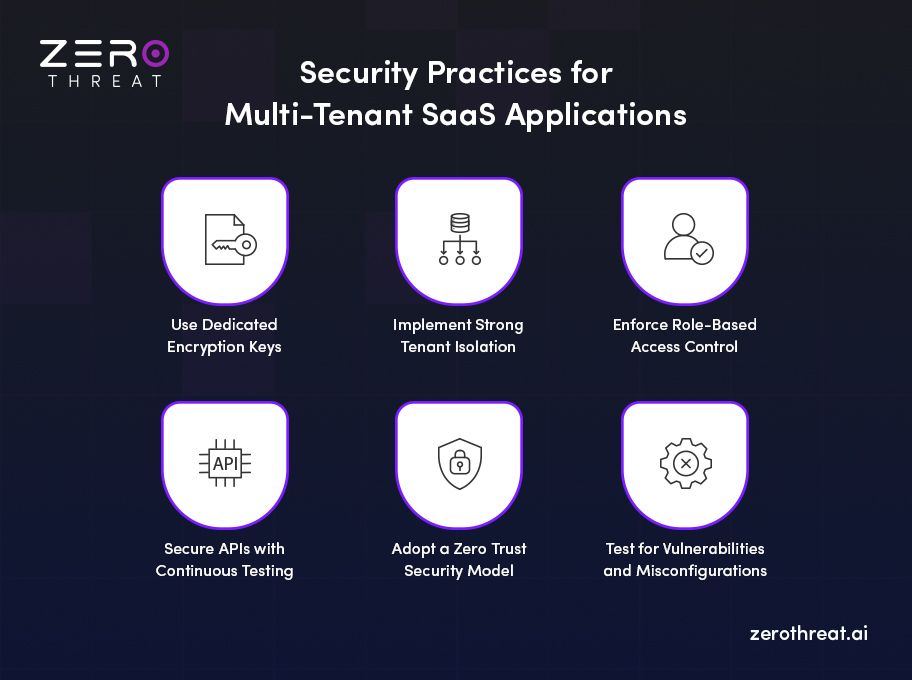
Use Dedicated Encryption Keys
Tenant isolation is the foundation of multi-tenant SaaS security. Each tenant’s data, users, and configurations should remain completely separate, even in shared infrastructure. The logical and data-layer isolation helps you to prevent unauthorized access between tenants. Regular isolation testing ensures that no cross-tenant data exposure goes unnoticed.
Implement Strong Tenant Isolation
Using dedicated encryption keys for each tenant adds an extra layer of protection. Even if one key is compromised, other tenants’ data remains secure. This approach strengthens multi-tenant SaaS database security and helps maintain compliance with data privacy regulations. You can rotate encryption keys periodically to keep the system even more resilient against breaches.
Enforce Role-Based Access Control (RBAC)
Access control flaws are one of the biggest security gaps in multi-tenant systems. With role-based access control, users only get access to what they need, and nothing more. When roles are clearly defined across tenants, it helps reduce the risk of privilege abuse. Plus, performing regular audits and automated role checks keeps access consistent and compliant.
Secure APIs with Continuous Testing
APIs are at the center of multi-tenant SaaS architecture security, connecting tenants to data and services. But without proper testing, they can expose sensitive information. Continuous API testing and monitoring help identify misconfigurations early. You can add authentication, rate limiting, and encryption to ensure every API interaction stays secure.
Adopt a Zero Trust Security Model
In a multi-tenant SaaS environment, Zero Trust means never assuming any user, device, or connection is safe by default. Every request is verified, no matter where it originates. This approach helps prevent unauthorized access within shared systems. It also complements tenant isolation by ensuring every interaction is validated and logged.
Test for Vulnerabilities and Misconfigurations
Regular security testing keeps your multi-tenant SaaS platform resilient. Automated scans and penetration tests reveal misconfigurations that manual checks often miss. By testing shared components, APIs, and databases, you can detect weak spots early. This allows you to fix the vulnerability issues and configuration errors before an attacker can exploit them.
See how a SaaS penetration testing tool helps you detect cross-tenant risks. Explore SaaS Pentesting Tool
Wrapping Up
Multi-tenant SaaS security comes down to managing shared resources without exposing shared risk. The right controls depend on your architecture, how many tenants you serve, and how your APIs and data flows are designed. But the goal stays the same, protecting every customer’s data while keeping the platform fast and scalable.
As SaaS applications grow and plug into more third-party tools and external APIs, the attack surface increases naturally. With practices such as continuous testing, tenant-aware encryption, and strong multi-tenant user management, you can avoid those security gaps. It helps you catch small issues before they turn into cross-tenant exposure or compliance trouble.
You can strengthen this process even further by using ZeroThreat’s pentesting tool to keep a closer eye on misconfigurations, API risks, and tenant isolation issues. Many SaaS teams use such tools to validate code and configuration changes to keep their multi-tenant environment secure.
Frequently Asked Questions
Why is securing a multi-tenant SaaS architecture more complex than single-tenant models?
Because multiple customers share the same infrastructure, a single flaw can expose data across tenants. You must secure tenant isolation, shared databases, APIs, and access controls all at once, which adds far more complexity than securing a dedicated environment.
How can ZeroThreat.ai help SaaS providers strengthen data isolation in multi-tenant environments?
Can ZeroThreat.ai integrate with existing SaaS infrastructure and cloud providers?
How does AI enhance multi-tenant SaaS security monitoring and response?
Why do configuration mistakes cause most data breaches in multi-tenant SaaS?
How does AI-driven remediation differ from rule-based automation in SaaS security?

Explore ZeroThreat
Automate security testing, save time, and avoid the pitfalls of manual work with ZeroThreat.