 ZeroThreat Wins Bronze Stevie® Award in Tech Startup of the Year Read more

All Blogs
Cost of Penetration Testing for FinTech Platforms: Complete Breakdown
Quick Overview: This blog explains the cost of penetration testing for FinTech platforms, covering key factors that influence pricing. It also breaks down costs by testing type and methodology, helping FinTech teams budget effectively. Plus, it discusses tips you can follow to reduce pentesting efforts and thus optimize the overall budget required for FinTech app security.
Penetration testing is a core part of any FinTech security program. With over 65% of digital financial services facing attempted cyberattacks in 2024, ensuring your platform can withstand real-world threats is essential.
If you’re running a FinTech product, you already know the importance of security. But when it comes to testing that security, one question that always comes up is how much penetration testing actually costs.
The answer isn’t one-size-fits-all. The cost of penetration testing for FinTech platforms depends on factors like app complexity, number of integrations, testing methodology, and industry regulations.
In this guide, we’ll break down the actual costs, key pricing factors, and what you should expect when budgeting for web, mobile, API, and cloud pentests in the FinTech space.
Find vulnerabilities 10X faster with near-zero false positives. Try Now for Free
On This Page
- FinTech Penetration Testing Cost Factors
- Cost of FinTech Pentesting by Type
- Breakdown of FinTech Pentesting Cost by Methodologies
- How to Optimize Your FinTech Pentesting Budget?
- Summing Up
What Factors Affect the Cost of Penetration Testing for FinTech Platforms?
Penetration testing costs for a FinTech platform depend on how complex your platform is, what’s being tested, and how the tests are run. The deeper and broader your attack surface, the more effort (and cost) it takes to secure it.
Let’s look at the key factors that influence your overall pentesting budget.
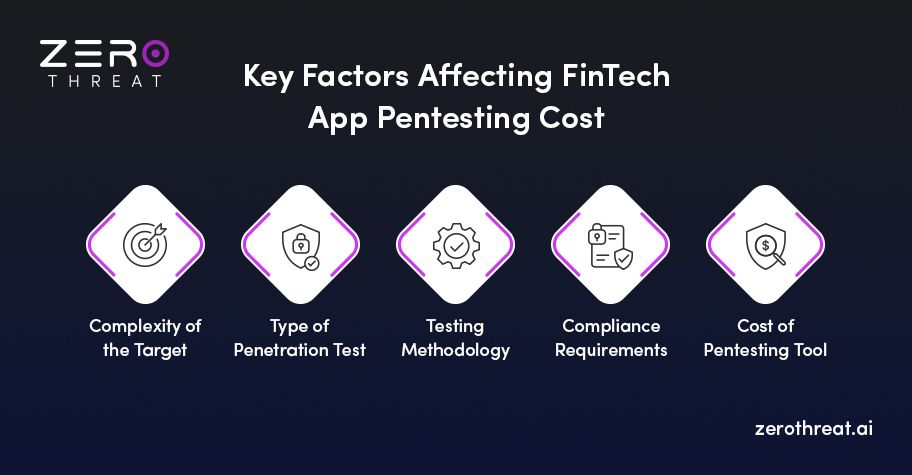
Complexity of the Target
FinTech platforms often involve multiple APIs, third-party integrations, payment gateways, and data storage layers. Each added component widens the attack surface and increases testing time. A small web app might take a few days to test, while pentesting a FinTech platform with payment gateways and APIs could take weeks, directly increasing the overall cost.
Type of Penetration Test
The type of pentest determines both scope and cost. For example, testing a FinTech web app costs less than performing a full API-driven FinTech pentest or mobile app pentest. Network or cloud testing adds another layer of cost. The more environments and entry points you include, the higher the testing effort and pricing.
Testing Methodology
Whether you choose a black-box, grey-box, or white-box approach changes the pricing significantly. A black-box test (where the tester has no prior knowledge) takes longer and costs more due to additional discovery work. A white-box test, while faster, involves reviewing source code and configurations, which also requires specialized expertise, which influences pricing.
Compliance Requirements
FinTech organizations often need to comply with regulations like PCI DSS and GDPR. These frameworks demand a more detailed and formal testing process, often with validated reporting and re-verification steps. That adds to both time and cost. In banking environments, where compliance standards are non-negotiable, the cost of penetration testing in banking is typically higher than in other industries.
Cost of Pentesting Tool
The pentesting tool used can also affect pricing. Advanced penetration testing platforms can lower manual effort but come with subscription fees. Fully manual testing, on the other hand, may take longer and cost more. The ideal setup for FinTech teams should be using automation for efficiency and human expertise for accuracy.
Cost of Penetration Testing in FinTech (Based on Type)
Penetration testing costs vary based on various factors, as we discussed in the above section. If we talk about FinTech platforms, they could use a mix of web, APIs, mobile, network, and cloud, each with a distinct pentesting cost.
Here is a quick overview of the cost for pentesting a FinTech platform based on the type.
| Type | Scope | Estimated Cost (Per Pentest) | Determining Factors |
|---|---|---|---|
| Web Application Pentesting | Tests web apps and portals for issues like injection flaws and auth bypasses. | $5,000 – $30,000 | App size, complexity, integrations, testing depth. |
| API Penetration Testing | Assesses APIs for broken auth, logic flaws, and data exposure. | $6,000 – $35,000 | Endpoint count, auth type, data sensitivity. |
| Mobile App Pentesting | Evaluates Android/iOS apps for storage, encryption, and API risks. | $8,000 – $40,000 | Platforms tested, SDKs used, backend links. |
| Network Penetration Testing | Tests internal and external networks for exposure and misconfigurations. | $5,000 – $25,000 | Network size, IPs, and hybrid setup. |
| Cloud Penetration Testing | Reviews AWS, Azure, or GCP setups for misconfigurations and access flaws. | $10,000 – $40,000 | Cloud scale, services, and compliance needs. |
| Wireless Pentesting | Checks Wi-Fi networks for weak encryption and rogue access points. | $4,000 – $15,000 | Site count, AP density, encryption type. |
| Social Engineering Pentesting | Simulates phishing or physical attacks to test employee awareness. | $3,000 – $20,000 | User count, campaign type, and training scope. |
Now that you have an overview of FinTech pentesting costs based on types, let’s have a detailed look at each of these.
Web Application Penetration Testing
Web application penetration testing focuses on identifying security flaws in customer-facing portals, dashboards, or payment gateways that FinTech platforms rely on every day. It checks for injection flaws, broken authentication, and business logic vulnerabilities that could expose financial data or user accounts.
The average cost of web application penetration testing typically ranges between $5,000 and $30,000, depending on the application’s size, complexity, and integrations.
What affects the cost:
- Number of pages, modules, and functionalities tested.
- Use of complex business logic or financial workflows.
- Authentication layers such as MFA or role-based access.
- Integration with APIs, third-party gateways, or plugins.
- Testing depth, whether it has a limited-scope or a full end-to-end.
Since most FinTech products operate online, web app pentesting often forms the foundation of their entire security program. If the user flows and data handling are complex, more effort, time, and budget will be required.
API Penetration Testing
API penetration testing evaluates the backend interfaces that power your FinTech applications, the layer where sensitive transactions and data exchanges happen. It helps detect issues like broken authentication, data exposure, and logic manipulation that scanners often miss.
The average cost of API penetration testing ranges from $6,000 to $35,000, depending on the number of endpoints, data sensitivity, and integrations involved.
What affects the cost:
- Number of APIs and unique endpoints tested.
- Complexity of request/response structures and data types.
- Use of authentication tokens, encryption, and rate limits.
- Interconnected microservices or third-party payment APIs.
- Level of manual validation needed for logic flaws and chained exploits.
In FinTech environments, APIs are the backbone of customer apps, payment flows, and partner integrations. That makes API pentesting one of the most valuable types of security testing.
Mobile App Pentesting
Mobile app pentesting helps uncover security gaps in Android and iOS apps that handle financial transactions, authentication, and personal data. It checks for insecure data storage, weak encryption, reverse engineering risks, and API misuse.
The average cost for mobile app pentesting in FinTech ranges from $8,000 to $40,000, depending on the number of app versions, platforms, and backend integrations.
What affects the cost:
- The number of mobile platforms tested (Android, iOS, or both).
- Use of third-party SDKs and payment modules.
- Depth of testing, including code review or binary analysis.
- Need for device-level testing to simulate real-world usage.
- Integration with APIs and backend services.
Mobile apps in FinTech often connect directly to core banking APIs or payment gateways, making them high-risk and higher in testing effort, which directly impacts cost.
Network Penetration Testing
Network pentesting focuses on assessing the internal and external infrastructure that supports your FinTech operations. It looks for open ports, security misconfigurations, exposed services, and privilege escalation paths that attackers could exploit.
The average cost for network penetration testing usually falls between $5,000 and $25,000, depending on the size and complexity of your network.
What affects the cost:
- Number of IP addresses, subnets, or systems in scope.
- Mix of on-premises and cloud-based assets.
- Testing depth (external only vs internal and external).
- Security controls like firewalls, VPNs, and IDS/IPS configurations.
- Reporting and retesting requirements for compliance validation.
For FinTechs with hybrid environments, cloud apps, office networks, and third-party integrations, the overall effort grows quickly. That makes network testing a key part of the total pentesting budget.
Cloud Penetration Testing
Cloud penetration testing focuses on assessing the security of your FinTech workloads hosted on cloud environments such as AWS, Azure, or Google Cloud. It identifies misconfigurations, access control gaps, and insecure storage setups that could expose sensitive financial data.
The average cost for cloud pentesting ranges between $10,000 and $40,000, depending on the complexity of the environment and compliance requirements.
What affects the cost:
- Number of cloud accounts, regions, and services in use.
- Depth of assessment, including IAM roles, S3 buckets, and API gateways.
- Use of multi-cloud or hybrid setups.
- Compliance-driven testing scope (PCI DSS, SOC 2, GDPR).
- Continuous monitoring or post-remediation validation needs.
FinTech companies rely heavily on cloud-native systems for scalability and automation, but that convenience often adds testing layers. Each misconfigured cloud resource increases potential risk, which is why cloud pentests are both detailed and cost-intensive.
Wireless Penetration Testing
Wireless pentesting targets Wi-Fi networks and connected devices within your FinTech offices or data centers. It checks for weak encryption, rogue access points, and vulnerabilities that attackers can exploit to gain internal access.
The average cost of wireless penetration testing ranges from $4,000 to $15,000, depending on the number of wireless networks and access points tested.
What affects the cost:
- Number of physical sites or office locations.
- Network size and access point density.
- Security configurations (WPA2/WPA3, guest networks, segmentation).
- Testing of IoT or payment-related devices connected to Wi-Fi.
- Time required for on-site or remote testing.
Wireless testing may seem minor compared to app or cloud pentesting, but in FinTech environments, a single vulnerable access point can open the door to internal systems, making it a cost-effective yet critical layer of testing.
Social Engineering Pentesting
Social engineering pentesting evaluates how well your FinTech team can detect and respond to human-targeted attacks. It simulates phishing attacks and phone scams to identify weaknesses in employee awareness and internal processes.
The average cost for social engineering pentesting ranges from $3,000 to $20,000, depending on the size of the organization and the type of simulation performed.
What affects the cost:
- Number of employees or departments included in the test.
- Type of social engineering used (phishing, pretexting, or onsite access).
- Depth of the campaign, one-time exercise vs. multiple staged attacks.
- Customization level of phishing templates or scenarios.
- Reporting and awareness training sessions are included after testing.
In FinTech, where access to sensitive financial systems often depends on user credentials, a single successful phishing email can cause serious damage. Social engineering pentesting helps identify those weak links early, strengthening the human layer of your cybersecurity strategy.
Secure your FinTech application with ZeroThreat’s automated pentesting tool. Let’s Get Started
Breakdown of FinTech Pentesting Cost by Methodologies
The cost of penetration testing in FinTech for each method needs a different level of effort and depth of testing. The more information testers have about your system, the more focused and efficient the test becomes.
Here is the FinTech pentesting cost table that will help you know the approximate cost for each methodology:
| Methodology | Cost (Per Pentesting) |
|---|---|
| White Box Testing | $15,000 – $50,000 |
| Black Box Testing | $5,000 – $20,000 |
| Gray Box Testing | $10,000 – $35,000 |
Now let’s get a closer look at what each method involves and how it affects your budget.
White Box Testing
In white box testing, testers have full access to your application’s architecture, source code, and internal documentation. This method helps uncover logic flaws, insecure code patterns, and misconfigurations that an external hacker might never see.
Because it’s thorough and resource-intensive, white box pentesting in FinTech can cost between $15,000 and $50,000, depending on system complexity. It’s often used by regulated FinTechs that need strong assurance before audits or compliance checks.
Black Box Testing
Black box testing simulates a real-world attacker with no prior knowledge of the target system. Testers explore your application or network from the outside, looking for ways to break in using exposed services, APIs, or interfaces.
It’s faster and less intrusive, but may not reveal all internal vulnerabilities. Costs usually range from $5,000 to $20,000, making it ideal for periodic external assessments or pre-launch security checks.
Gray Box Testing
Gray box testing combines both approaches. Testers are given limited credentials to evaluate both external and internal risks effectively. This balance offers deeper insights without the cost of a full white box test.
The pentests cost range from $10,000 to $35,000, depending on how much internal information is shared. It’s often the go-to choice for FinTechs wanting both efficiency and coverage in their security validation efforts.
How to Optimize Your FinTech Pentesting Budget?
Penetration testing can be expensive, especially for FinTech platforms handling sensitive financial data and strict compliance needs. But spending more doesn’t always mean getting better results. The key lies in how you plan, scope, and manage your testing efforts.
Here are some practical ways to pentest smartly and save on it:
- Focus on testing on high-risk applications, APIs, and payment systems that store or process financial data.
- Avoid unnecessary testing areas by outlining exactly what needs assessment before the engagement begins.
- Use automation to catch common vulnerabilities before involving human testers.
- Combine manual testing for complex logic flaws with automated scans for routine checks.
- Test after major code pushes or infrastructure changes instead of fixed calendar dates.
- Track and verify previous fixes instead of retesting everything from scratch.
- Plan pentests to overlap with regulatory reviews to save both time and effort.
Smart budgeting is about testing efficiently with a clear goal. By focusing on what truly matters, FinTech firms can stay secure while keeping their pentesting costs under control.
Ready to secure your FinTech platform? Let’s plan your next penetration test. Contact Us
Summing Up
The cost of pentesting for a FinTech platform varies depending on the type of test, system complexity, compliance requirements, and depth. Web, mobile, API, and cloud tests each have different scopes and pricing based on the efforts required.
In the end, penetration testing is a long-term investment in trust and resilience. For FinTech companies handling sensitive data, well-planned testing helps prevent breaches, ensures continuous security and compliance.
As platforms grow and integrate more APIs and services, maintaining visibility into potential risks becomes harder. That’s where an automated pentesting tool can help simplify this process, allowing you to detect vulnerabilities early and keep your FinTech platform secure.
Frequently Asked Questions
How much does penetration testing cost for banks?
Penetration testing for banks typically costs between $20,000 and $100,000, depending on the scope, compliance needs, and the number of digital assets tested. Financial institutions usually pay more due to strict security and regulatory standards.
What is the average cost of penetration testing in the finance sector?
What factors affect the cost of penetration testing for fintech companies?
What is the difference in cost between manual and automated penetration testing?
What is included in the cost of a penetration testing service?

Explore ZeroThreat
Automate security testing, save time, and avoid the pitfalls of manual work with ZeroThreat.