 ZeroThreat Wins Bronze Stevie® Award in Tech Startup of the Year Read more

All Blogs
Top-Rated PCI DSS Scanning Tools to Reduce Compliance Efforts in 2026
Quick Overview: Staying PCI DSS compliant is vital for protecting payment data and avoiding costly breaches. This blog explores the best PCI DSS scanning tools—like ZeroThreat, Qualys, Vanta, and more—that help businesses identify risks, automate compliance, and stay secure. Discover which PCI DSS tools fit your needs in today’s fast-evolving cybersecurity landscape.
When it comes to handling sensitive data, compliance is not optional – it’s essential. PCI DSS (Payment Card Industry Data Security Standard) is a regulatory compliance to standardize security for companies dealing with cardholder information. It ensures security during the processing, storage, and transmission of credit card information.
But let’s be honest: staying compliant with PCI DSS can feel like trying to hit a moving target, especially with rapidly evolving cyber threats. That’s where vulnerability scanning tools step in as your compliance wingman.
PCI compliance scanners streamline and automate the 12 core requirements set by PCI-DSS, helping organizations effectively achieve and maintain compliance with industry standards.
This PCI DSS vulnerability scanning tools do more than just tick off requirement checkboxes – they actively identify and reduce your exposure to threats. PCI-DSS compliance audit software helps organizations uphold global security standards, which are then assessed by PCI-approved QSAs or ASVs to ensure successful certification.
Whether you're a startup launching your first product or an enterprise managing millions of transactions, selecting the right tool for PCI DSS vulnerability scanning is critical to ensure both security and compliance without operational headaches.
In this blog, we’ll determine the best PCI DSS vulnerability scanning tools in 2026—including the rising star, ZeroThreat. We’ll look at their capabilities, where they shine, and how they help you pass compliance with flying colors.
Stay ahead of audits and breaches with automated PCI DSS scans. Start Free Scanning Now
On This Page
- Why PCI DSS Compliance Matters
- What Makes a Great PCI DSS Vulnerability Scanning Tool?
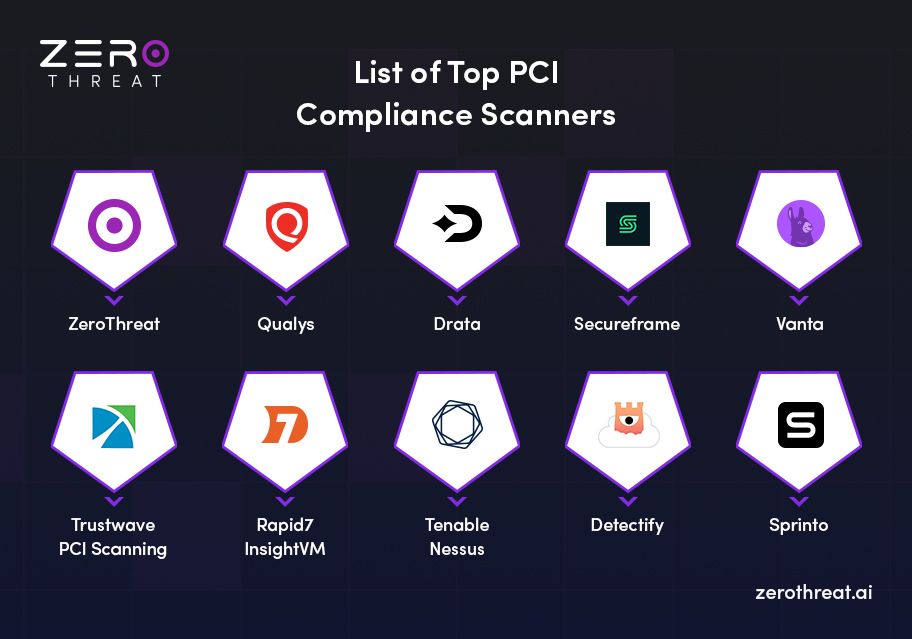
- Comparing Best PCI-DSS Compliance Vulnerability Scanning Tools
- Top PCI-DSS Compliance Vulnerability Scanning Tools
- Simplify PCI DSS Compliance at Every Stage with ZeroThreat
- Wrapping Up
Why PCI DSS Compliance Matters
As we know, PCI DSS compliance is a global standard designed to protect cardholder data and reduce credit card fraud. It’s not a law, but if your organization accepts or processes credit cards, you are contractually obligated by major card brands to comply.
PCI DSS includes 12 main requirements, with vulnerability scanning falling under:
- Requirement 11.2: Run internal and external network vulnerability scans at least quarterly and after any significant change.
- Requirement 6.1 and 6.2: Identify and fix vulnerabilities through risk ranking and timely patching.
Failing to comply can result in hefty fines, damaged reputation, or worse—actual data breaches.
That brings us to the next question…
What Makes a Great PCI DSS Vulnerability Scanning Tool?
Here’s what to consider while choosing a PCI compliance software:
- ASV Certification (Approved Scanning Vendor): For external scans required by PCI DSS.
- Authenticated and Unauthenticated Scanning: Especially for web applications and internal environments.
- Comprehensive Reporting: Generates actionable remediation reports aligned with PCI DSS.
- Accuracy and Low False Positives: Saves time during remediation and audit preparation.
- Ease of Use: Especially if your team lacks security expertise.
- Integration and Automation: Fits into your CI/CD pipeline and SDLC for continuous compliance.
Now, let’s go through the best PCI DSS vulnerability scanners in 2026.
Comparing Best PCI-DSS Compliance Vulnerability Scanning Tools
| Tool | PCI Support Level | Scan Scope | Internal Scans | Automation | Reporting | Integration | Best For |
|---|---|---|---|---|---|---|---|
| ZeroThreat | PCI-aligned compliance & vuln checks | App/API + infra | Yes | High – CI/CD + automated workflows | Audit-ready, mapped to controls | Integrates security pipelines | DevSecOps + compliance teams |
| Qualys | Full PCI DSS & compliance | External + internal + cloud | Yes | Strong automation | Strong compliance dashboards | Asset & config integration | Enterprise PCI programs |
| Drata | PCI compliance automation | Compliance controls w/ scans | Basic | High – continuous control automated | Real-time evidence + dashboards | Cloud & service integrations | Compliance automation teams |
| Secureframe | PCI control automation | Compliance readiness + monitoring | Partial | Medium – evidence + alerts | Centralized audit evidence | IT & cloud stack integrations | Mid-size compliance teams |
| Vanta | PCI & multi-framework automation | Compliance posture scanning | Basic | High – rule-based triggers | Live compliance tracking | Integrates cloud + HR + code | Startups & SMBs |
| Trustwave | PCI DSS external scanning | External vulnerability scans | No | Medium – scheduled scans | ASV audit-ready reporting | Limited third-party | Merchants needing ASV scans |
| Rapid7 InsightVM | PCI aligned vuln mgmt | Internal + external | Yes | High – risk scoring & workflows | Real-time compliance reports | SIEM & ticketing | Large orgs + risk teams |
| Nessus (Tenable) | Internal vuln scanning | Internal systems + configs | Yes | Medium – scan automation | Configurable compliance reports | SIEM & infra tools | Internal PCI readiness |
| Detectify | Web app vulnerability prep | External web scans | No | Medium – targeted web scans | Dev-oriented reports | API + dashboards | Pre-audit web hardening |
| Sprinto | End-to-end compliance automation | Controls + evidence | Yes | High – rule & audit automation | Auditor-ready documentation | Continuous compliance | Full compliance lifecycle |
Top PCI-DSS Compliance Vulnerability Scanning Tools
1. ZeroThreat
ZeroThreat is an advanced PCI DSS assessment tool designed to meet the security standards of applications. It offers dynamic application security testing (DAST) and PCI-DSS compliance scans for web applications and APIs to identify hidden vulnerabilities and non-compliance threats.
As an automated pentesting tool, ZeroThreat simulates more than 130K attacks for PCI DSS vulnerability scanning in every layer of apps. It stands upto its name and security standards when compliance and risk mitigation go hand in hand.
Why ZeroThreat:
- Near-Zero False Positives: ZeroThreat’s intelligent crawler and AI engine deliver up to 99.9% vulnerability assessment, which drastically reduces noise in vulnerability reports.
- 10x Faster Scanning: Efficient scanning for both authenticated and unauthenticated environments mean you can stay PCI compliant with less waiting.
- Built-in PCI DSS Reporting: You can get auto-generated, audit-ready reports tailored to PCI DSS requirement mappings.
- No Configuration Needed: You can perform scans right out of the box without any technical knowledge and configuration, even for apps behind MFA or session-based logins.
- AI-Powered Fix Recommendations: Developers get instant, contextual remediation suggestions to patch vulnerabilities quickly.
ZeroThreat Advantage:
- Supports full DevSecOps integration with pipelines, making it perfect for teams practicing CI/CD.
- Scans modern, dynamic web apps and APIs, even those with complex authentication flows.
- Allows mapping of PCI requirements to actual vulnerabilities found, enabling direct tracking of compliance gaps.
Pro Tip: Use ZeroThreat’s scheduled PCI vulnerability scan feature to automate your quarterly scans and never miss a compliance gap.
2. Qualys
Qualys is a leading PCI DSS audit tool that simplifies compliance by making audit data easily accessible and helping you inventory all cloud-based IT assets while monitoring their security status. Its powerful vulnerability scanner addresses up to 97% of PCI-DSS requirements, automating the compliance scanning process.
As a cloud-based PCI DSS tool, Qualys offers broad vulnerability detection with deep asset management capabilities. With continuous monitoring, vulnerability management, compliance solution, and web application firewalls, Qualys stands out as a top choice among PCI compliance vendors.
Pros:
- ASV Certified for external PCI scans.
- Granular asset tagging and policy compliance tracking.
- Centralized dashboard for managing vulnerabilities across global infrastructure.
- Automates patch verification and policy enforcement.
Cons:
- Complex to set up and manage.
- Interface may feel outdated or clunky for fast-moving teams.
3) Drata
Drata is a very popular PCI compliance solutions platform that integrates scanning tools to streamline PCI readiness. It helps you achieve and maintain frameworks like SOC2, ISO 27001, HIPAA, GDPR, and PCI DSS without putting any effort.
It generates an inventory of cyber assets by automating evidence collection for PCI DSS compliance audits. It offers automated inventory creation with built-in asset and personnel tracking, along with continuous monitoring to ensure real-time compliance visibility. And that’s the reason Drata is popular with startups and growing tech companies that want to stay secure and audit-ready without building an entire compliance team.
Pros:
- Automates compliance for frameworks like SOC 2, ISO 27001, HIPAA, and PCI-DSS.
- Real-time monitoring of controls and systems.
- Seamless integrations with popular tools (AWS, GitHub, Jira, etc.).
- Automated evidence collection and audit readiness.
- Intuitive dashboard and user-friendly UI.
- Reduces manual effort and human error in compliance workflows.
Cons:
- Can be pricey for small businesses or early-stage startups.
- Requires initial setup and integration effort.
- Limited support for custom or less common compliance frameworks.
- Heavy dependency on integrations—missing links may limit functionality.
4. Secureframe
Secureframe is a security and compliance automation platform that helps companies achieve and maintain industry certifications like SOC 2, ISO 27001, HIPAA, PCI-DSS, GDPR, and more—with less manual effort.
This PCI DSS compliance software monitors 150+ cloud services, offering detailed vendor risk assessments and automated evidence collection to ensure your company stays compliant.
What sets Secureframe apart is its blend of automation and expert guidance—they pair you with compliance specialists to help you navigate frameworks and audits more smoothly.
Pros:
- Offers dedicated compliance support and expert guidance.
- Good multi-framework coverage (SOC 2, ISO, HIPAA, PCI).
- Great balance of automation and manual controls.
- Built-in policy library and risk management.
Cons:
- Less automation compared to Drata.
- Can be expensive for what smaller teams need.
- Some UI/UX elements feel less polished.
Struggling with PCI compliance? Let our AI-powered compliance-ready report simplify the process. Get PCI Compliant Today
5. Vanta
Vanta is a popular PCI-DSS compliance scanner that automates tasks and helps companies maintain certifications like SOC 2, ISO 27001, HIPAA, PCI DSS, and GDPR faster. This PCI compliance vendor customizes security controls and provides continuous scans.
Its centralized dashboard offers real-time visibility into your security posture, making it easy to track compliance progress, identify gaps, and improve overall practices efficiently.
Pros:
- Super quick setup and onboarding.
- Focused, beginner-friendly interface.
- Strong for SOC 2 and ISO 27001 with lightweight guidance.
- Cost-effective for small teams.
Cons:
- Limited support for complex compliance needs or multiple frameworks.
- Not as flexible for mature companies or custom controls.
- Real-time monitoring isn’t very deep.
6. Trustwave PCI Scanning
Trustwave PCI Scanning is a service offered by Trustwave, an Approved Scanning Vendor (ASV) by the PCI Security Standards Council. It helps organizations comply with PCI-DSS requirements and best practices, which mandate regular external vulnerability scans for systems that store, process, or transmit credit card data.
Pros:
- Simple dashboard makes it easy to schedule scans and access reports.
- Allows automated, recurring scans to help maintain ongoing compliance.
- Provides clear guidance on how to fix vulnerabilities.
- Quickly generates reports that can be submitted for PCI audits.
Cons:
- Only scans external-facing systems and doesn’t support internal network checks.
- May be relatively expensive for smaller businesses with limited budgets.
- Occasionally flags issues that require manual validation.
- Doesn’t offer deep testing for web applications or advanced app-layer vulnerabilities.
7. Rapid7 InsightVM
Rapid InsightVM is a powerful PCI DSS scanning solution designed to help organizations identify, assess, and remedite security risks. This PCI DSS tool enables continuous visibility and real-time analytics, making it a strong choice for businesses working toward or maintaining PCI-DSS compliance.
It scans external and internal systems, prioritizes vulnerability based on risk, and tracks remediation progress across your teams.
Pros:
- Offers both internal and external scanning to meet PCI-DSS standards.
- Integrates with ticketing systems to automate remediation workflows.
- Real-time dashboards help security teams track compliance posture.
- Supports authenticated scans to reduce false positives.
Cons:
- Can be complex to configure and manage for smaller teams.
- Higher price point may not suit SMBs with tight budgets.
- Requires some technical expertise to fully utilize advanced features.
- Interface can be overwhelming for new users without prior experience.
8. Tenable Nessus
Tenable Nessus is a widely used PCI compliance tool that plays a critical role in identifying vulnerabilities across your environment before formal PCI scans are conducted.
It scans IT assets, servers, networks, databases, and applications to discover misconfigurations, outdated software, and exploitable flaws. Security teams often use Nessus during internal audits or as part of their continuous vulnerability management program to maintain PCI-DSS readiness.
Pros:
- Detects a wide range of vulnerabilities with high accuracy.
- Supports configuration audits for many PCI-DSS controls.
- Offers customizable scan policies for internal environments.
- Integrates well with SIEMs and ticketing systems for streamlined remediation.
- Regular plugin updates ensure current threat coverage.
Cons:
- Cannot be used alone for external scans requiring ASV approval.
- May overwhelm smaller teams with large scan data or complex results.
- Requires expertise to interpret scan results and map them to PCI controls.
- Some features are locked behind the professional/enterprise license.
9. Detectify
Detectify is a cloud-based web application security scanner built by ethical hackers. It automates external vulnerability scanning to help businesses identify and fix security issues that could impact compliance with PCI DSS.
Detectify uses a continuously updated knowledge base powered by a crowdsourced community of ethical hackers, ensuring up-to-date PCI compliance vulnerability scans. While Detectify is not an ASV (Approved Scanning Vendor), it is widely used for pre-scan hardening before official PCI compliance scans and complements other ASV tools well.
Pros:
- Continuously updated with the latest vulnerabilities via ethical hacker research.
- Useful for pre-audit vulnerability cleanup to pass official PCI scans more easily.
- Detailed reporting with developer-friendly remediation advice.
Cons:
- Limited internal scanning or network-level testing capabilities.
- May not be cost-effective for very small businesses or infrequent users.
- Heavily focused on web apps—less helpful if your PCI scope includes non-web systems.
10. Sprinto
Sprinto is a PCI audit software that helps businesses meet PCI-DSS compliance requirements. Sprinto streamlines the compliance process by automating evidence collection, monitoring security controls, tracking policies, and guiding teams through audit readiness. It provides live sessions that help your organization construct a faster implementation plan.
Pros:
- Automates most of the heavy lifting involved in PCI-DSS preparation.
- Integrates with cloud platforms (AWS, Azure, GCP) and developer tools.
- Offers audit-ready documentation and evidence collection.
- Tracks tasks and responsibilities across teams for better accountability.
Cons:
- May be over-featured for very small businesses with basic PCI needs.
- Pricing could be a concern for early-stage startups.
- Lacks deep vulnerability scanning—needs to be paired with a dedicated PCI ASV scanner for full coverage.
Meet all 12 PCI DSS controls with confidence and speed. Connect with Us Now
Simplify PCI DSS Compliance at Every Stage with ZeroThreat
ZeroThreat is one of the best PCI DSS tools, which empowers businesses to streamline their compliance from start to finish with its AI-driven vulnerability scanning and compliance-ready report. Moreover, ZeroThreat easily integrates with your CI/CD pipeline and scans behind authentication to find critical vulnerabilities like OWASP Top 10 and CWE/SANS Top 25 that other traditional PCI scanners miss.
Executive-friendly dashboards and audit-ready reports simplify communication with PCI DSS Qualified Security Assessors (QSAs). Whether you're an individual security expert, a startup handling cardholder data, or a large enterprise preparing for your next compliance audit, ZeroThreat offers the technical precision and ease of use to keep your applications secure and aligned with PCI DSS requirements—at every step of the compliance journey.
So, what are you waiting for? Sign up for a free PCI scan now and make your apps secure.
Wrapping Up
Choosing the right PCI DSS vulnerability scanning tool is crucial for securing cardholder data and achieving compliance. Whether you need AI-driven insights, managed services, or automation support, the tools above offer solutions for every business size. Prioritize accuracy, usability, and integration to build a resilient, audit-ready security posture. And choose a PCI compliance scanner wisely.

Explore ZeroThreat
Automate security testing, save time, and avoid the pitfalls of manual work with ZeroThreat.